Failover on Paper: How Untested Redundancy Systems Leave Businesses Exposed at the Worst Possible Moment
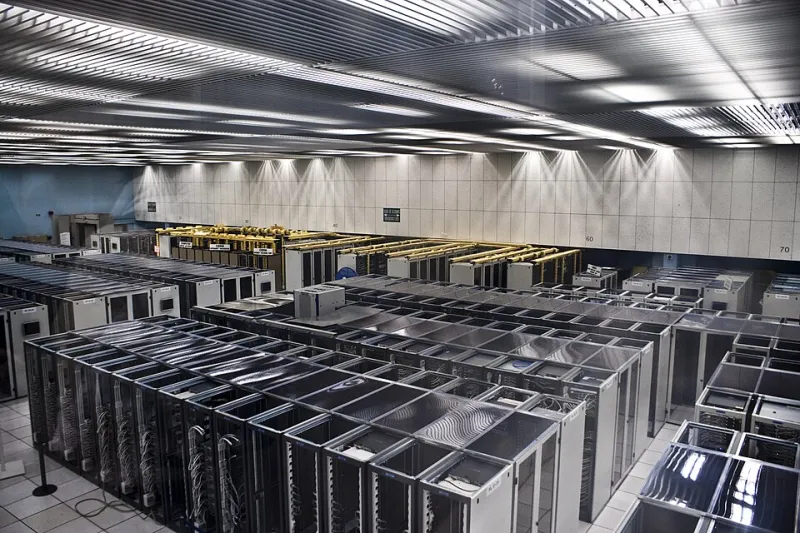
Photo: Florian Hirzinger - www.fh-ap.com, CC BY-SA 3.0, via Wikimedia Commons
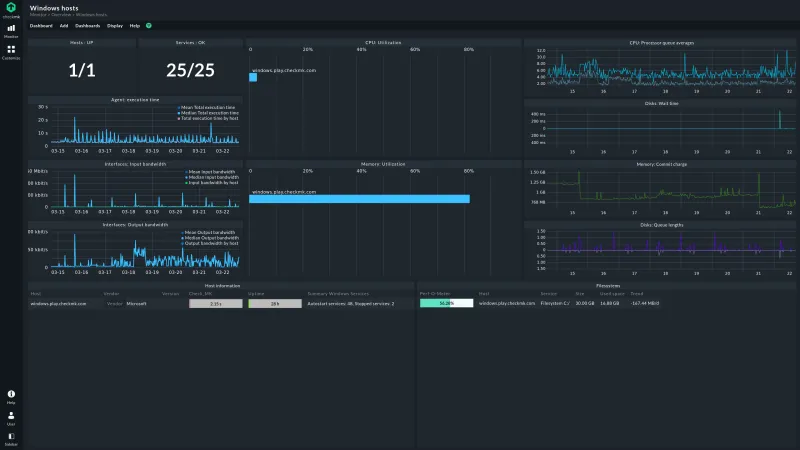
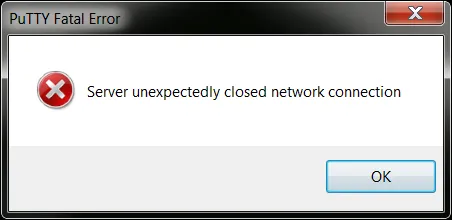
There is a particular kind of dread that settles over an IT director at 2:00 a.m. when the monitoring dashboard turns red and the failover system — the one the sales team confidently described as "automatic" and "seamless" — simply does not activate. The primary server is down. The backup is silent. And somewhere, customers are staring at error pages.
This scenario is far more common than the hosting industry would prefer to acknowledge. Across data centers and cloud environments throughout the United States, a quiet epidemic of what infrastructure professionals have begun calling "redundancy theater" has taken hold. Providers advertise high-availability architecture, multi-region failover, and automatic disaster recovery. The documentation looks thorough. The diagrams look impressive. But when genuine failure arrives, the curtain falls and the stage behind it is empty.
What Redundancy Theater Actually Looks Like
Redundancy theater is not necessarily the product of malicious intent. In many cases, it begins with genuinely good engineering decisions that are never properly maintained, validated, or stress-tested after deployment. A hosting provider installs a secondary load balancer. A failover routing rule is configured. A backup database replica is spun up. At the moment of initial deployment, the architecture functions exactly as designed.
Then time passes. Software is updated on the primary node but not the secondary. Configuration drift occurs. The heartbeat monitoring tool that was supposed to trigger automatic failover is quietly disabled during a routine maintenance window and never re-enabled. A junior administrator adjusts a firewall rule that inadvertently breaks the replication pathway. None of these individual changes appear catastrophic in isolation. Together, they render the failover system entirely non-functional — and nobody knows it until the worst possible moment.
This is the defining characteristic of redundancy theater: the failure is invisible right up until it is catastrophic.
Case Studies in Cascading Failure
Consider the experience of a mid-sized e-commerce retailer based in the Midwest that relied on a managed hosting provider's advertised "automatic failover" infrastructure. During a major promotional sales event, a storage controller failure on the primary cluster triggered what should have been a routine failover to a secondary environment. Instead, the automated failover script encountered a permissions error introduced during a patch cycle several months earlier. The script failed silently. No alert was generated. The secondary environment never received traffic. The retailer's site remained offline for over four hours during one of its highest-traffic periods of the year.
When the post-incident review was completed, it emerged that the failover system had not been end-to-end tested in over fourteen months. The hosting provider's SLA language, examined carefully, required only that redundant infrastructure be "available" — not that it be functional or regularly validated.
A similar pattern emerged at a regional financial services firm in the Southeast. Their hosting provider's architecture documentation described a geographically distributed redundancy model with automatic DNS-based failover. During a network-level outage affecting the primary data center, the DNS failover mechanism was triggered — but the secondary environment's SSL certificates had expired six weeks earlier and were never renewed. Browsers rejected the connection. Customers were effectively locked out even though the backup infrastructure was technically online.
In both cases, the organizations had paid a meaningful premium specifically for redundancy capabilities they believed were operational.
The Testing Gap: Why Validation Is the Exception, Not the Rule
Industry conversations with infrastructure engineers consistently reveal the same uncomfortable truth: scheduled, realistic failover testing is rare. There are practical reasons for this. Genuine failover testing requires deliberately inducing failure in production systems, which carries real risk. It requires coordination across teams. It requires executive sign-off and communication with customers about planned maintenance windows.
As a result, many providers substitute documentation reviews, architecture audits, and component-level testing for actual end-to-end failover drills. These reviews have value, but they do not replicate the conditions under which real failures occur. Real failures involve unexpected combinations of system state, network conditions, and timing that no architecture diagram anticipates.
The organizations that genuinely validate their redundancy infrastructure treat failover testing the way the aviation industry treats emergency procedures: as a regular, mandatory, and rigorously documented exercise. They run chaos engineering exercises. They simulate database failures, network partitions, and power events. They verify not just that secondary systems activate, but that they handle real traffic loads, maintain data consistency, and return accurate responses.
The difference in outcomes between organizations that test and those that assume is not marginal. It is the difference between a four-minute outage and a four-hour one.
What Genuine Redundancy Actually Requires
Authentic high-availability infrastructure demands more than duplicated hardware. It requires a living operational discipline that treats redundancy as a continuous practice rather than a one-time architectural decision.
At minimum, organizations evaluating a hosting provider's redundancy claims should ask the following questions:
When was the last full end-to-end failover test conducted, and what documentation exists of the results? Providers who cannot answer this question with specificity are telling you something important about their operational maturity.
What is the defined RTO and RPO, and how were those figures validated? Recovery Time Objective and Recovery Point Objective targets are only meaningful if they have been measured against actual failover events or controlled tests — not estimated from architectural assumptions.
How is configuration drift between primary and secondary environments detected and corrected? The answer should describe an automated process, not a periodic manual review.
What happens when the failover mechanism itself fails? Redundancy systems are not immune to failure. A provider with mature infrastructure will have a clearly defined escalation path for scenarios where automated failover does not activate as expected.
Is failover testing included in the SLA, and what are the contractual consequences if redundancy capabilities are not maintained? SLA language that guarantees "availability" of redundant infrastructure without specifying functional validation requirements offers considerably weaker protection than it appears to.
The Operational and Financial Stakes
For US businesses operating in competitive markets, the financial consequences of discovering non-functional redundancy during an actual outage extend well beyond the immediate revenue loss. Regulatory exposure is a meaningful concern in sectors including healthcare, financial services, and payment processing, where infrastructure availability and data integrity requirements carry legal weight. Customer trust, once eroded by a high-visibility outage, recovers slowly and incompletely.
Perhaps most frustratingly, the premium paid for redundant hosting is wasted entirely if that redundancy is never validated. Organizations end up paying for the appearance of resilience without receiving the substance of it.
Demanding More Than Architecture Diagrams
The hosting industry's marketing vocabulary has grown increasingly sophisticated, but the underlying operational discipline has not always kept pace. Terms like "multi-region redundancy," "automatic failover," and "high availability" have genuine technical meaning — but they also function as effective sales language regardless of whether the underlying implementation is rigorously maintained.
The responsibility for closing this gap falls on both providers and the organizations that rely on them. Providers who treat failover validation as a core operational commitment, not an afterthought, distinguish themselves in ways that matter precisely when they matter most. Organizations that ask harder questions during the procurement process — and insist on contractual language that reflects functional validation, not just architectural presence — are far less likely to experience the particular dread of watching a backup system fail to activate at 2:00 a.m.
Redundancy is not a diagram. It is a discipline. The providers who understand that distinction are the ones worth trusting with your infrastructure.